The First Ball Game

An Exhibit Celebrating North American
Nations & Cultures Coming Together

kick off your summer

with an unforgettable
cultural experience

As one of the world’s largest sporting events takes center stage across North America in 2026, the cities of Guadalajara, Atlanta and Toronto will also host an international celebration of sport, culture and history — the Olmec Cup.

Honoring the Olmec civilization as the Mother Culture of Mesoamerica, Olmec Cup unites North American countries and cultures during one of the world’s biggest global events, offering visitors a chance to experience “the first ball game” like never before.

get ready

to experience
the first ball game

The Olmecs were the first to develop the rubber technology needed to create the ball and, in turn, establish the world’s first team ball game. Much like football today, this ancient game was far more than a sport – it was a cornerstone of the Mesoamerican worldview, symbolizing life, death and renewal.

By honoring the Olmec civilization – creators of the first known ball game more than 3,000 years ago  – the Olmec Cup brings ancient history to life, bridging one of the earliest origins of sport with the global spirit of modern soccer.
discover a special lineup

of talented international artists

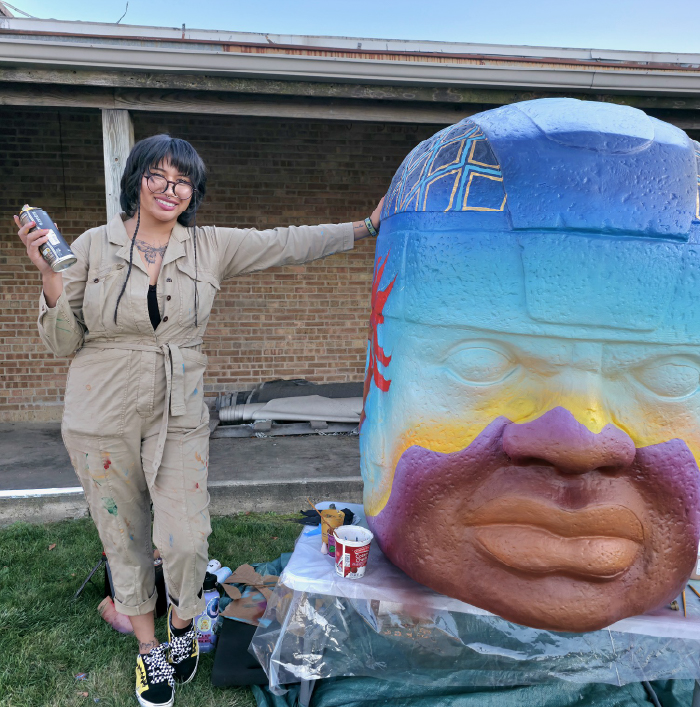
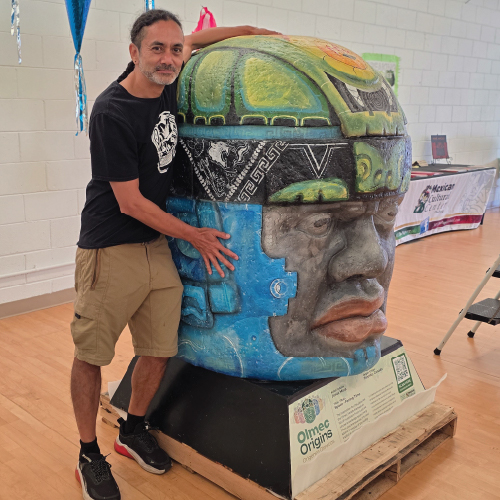
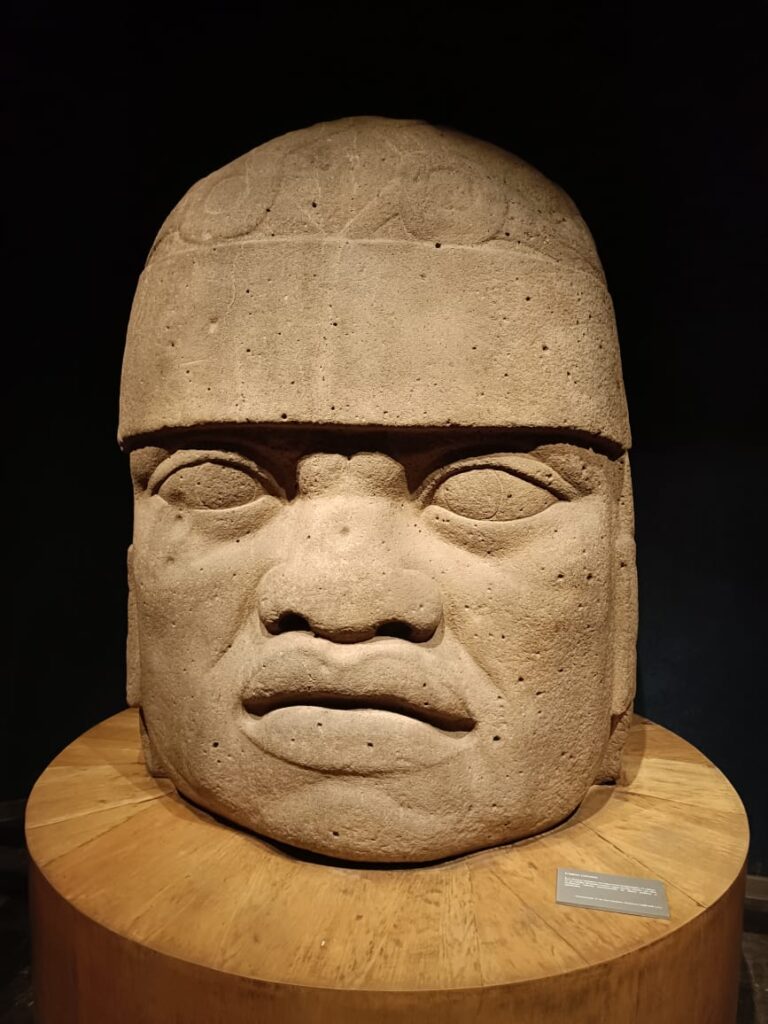
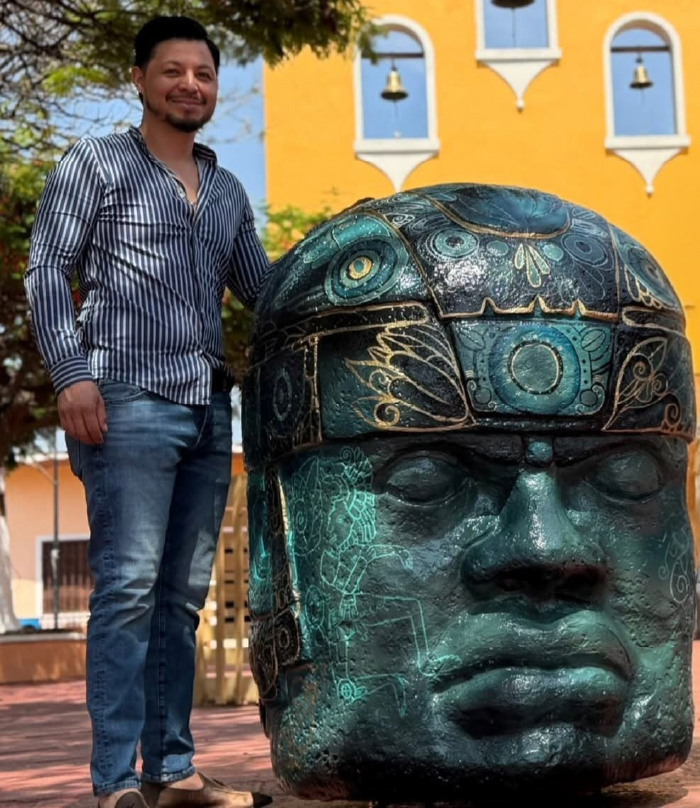
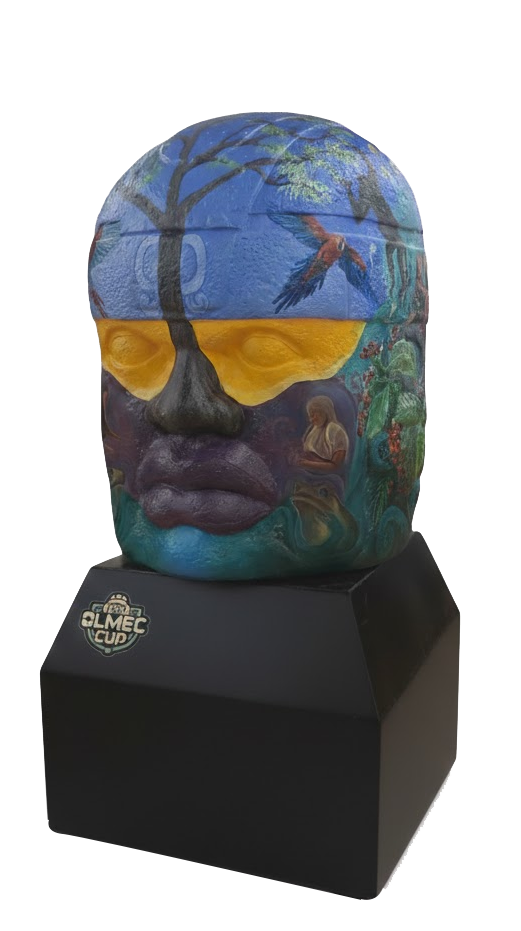
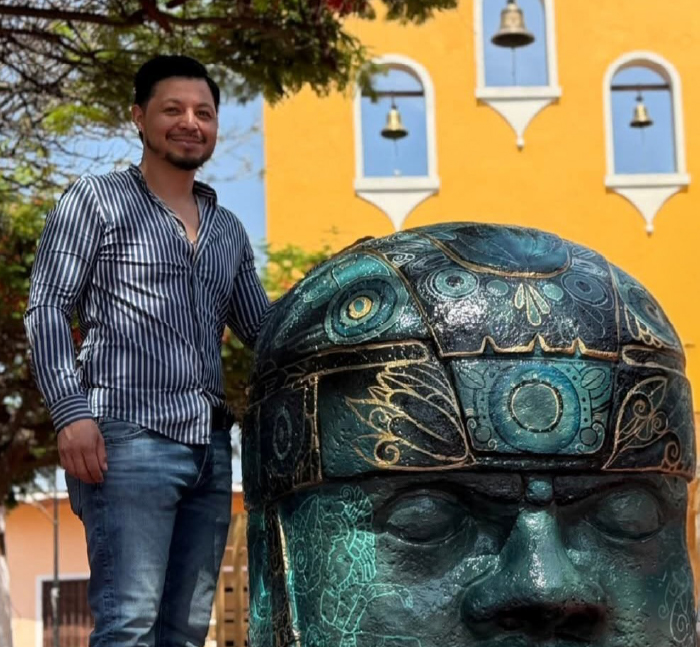
In the streets of Guadalajara, Atlanta, and Toronto, three colossal fiberglass inspired heads stand as modern monuments. These are not static relics; they are living canvases. To bring this legacy into the present, three distinct artists representing their countries hosting the games have been commissioned to weave the story of their heritage and the Mexican diaspora into the fabric of these global cities.

Rey Trigueros

In Guadalajara, artist Rey Trigueros presents “Reevolution of Origin,” capturing the unbroken spirit of the land where these traditions began and honoring the continuous line of ancestral identity.

Pato Muñoz Vázquez

In Atlanta, Mexican-American artist Pato Muñoz Vázquez presents “Our Ancestors Dreamed Us,” illustrating how heritage thrives, adapts, and blooms beautifully within the cultural tapestry of the United States.

Jesus Mora

In Toronto, Mexican-Canadian artist Jesus Mora presents “Space Facing Time,” telling the story of the diaspora’s northernmost reach and marking the enduring, resilient presence of Mexican identity in Canada.

applaud our supporters

spanning across the continent

The Olmec Cup would not be possible without the generous support of our partners and community champions. We extend our sincere gratitude for their commitment to celebrating art and culture.
The Olmec Cup extends the legacy of the Mexican Cultural Center DuPage’s acclaimed Olmec Origins traveling exhibit, furthering its mission through public art and cultural engagement.

For additional information about Olmec Origins, please contact Fernando Ramirez, President of the Mexican Cultural Center DuPage, at fernando.mccdupage@gmail.com.

The Mother Culture of Mesoamerica

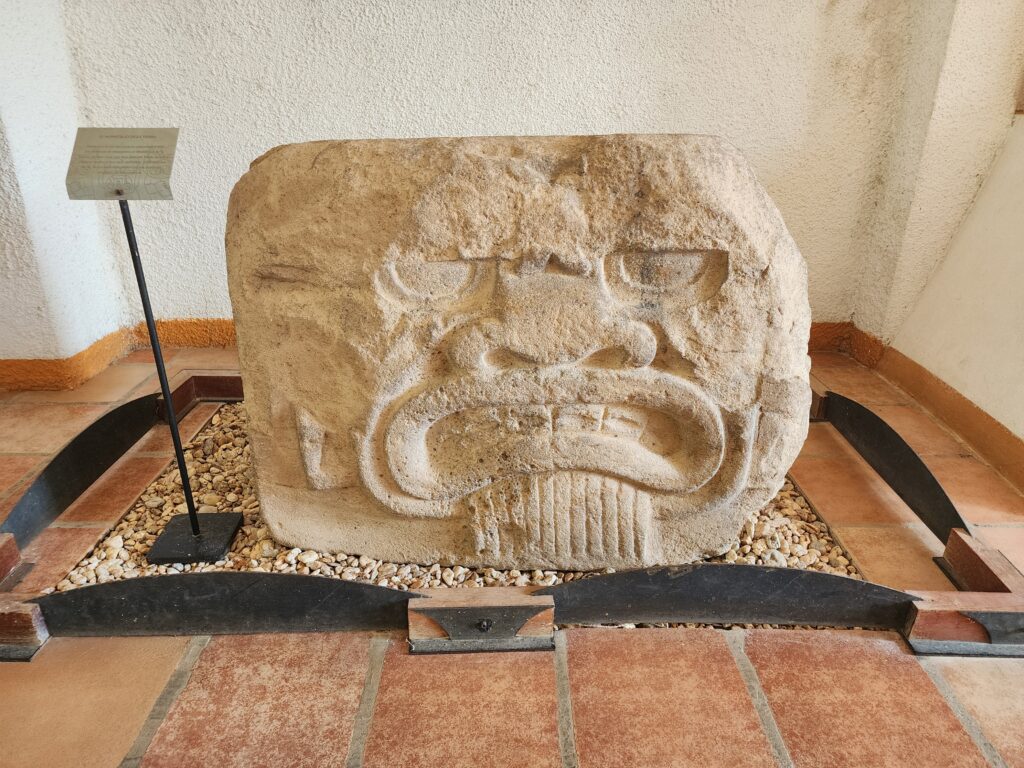
Long before modern stadiums and global sporting events, the Olmec civilization emerged in the tropical lowlands of south-central Mexico and helped shape the cultural foundation of Mesoamerica. Often called the “Mother Culture,” the Olmecs influenced later civilizations such as the Maya and Aztecs through their advancements in art, mathematics, engineering and astronomy.

The Olmecs were among the first civilizations in the Americas to develop a writing system and calendar, and their mathematical innovations introduced the concept of zero — a revolutionary breakthrough that enabled sophisticated calculations and astronomical tracking. Their engineering achievements were equally remarkable, including the transportation and carving of massive basalt stones into the iconic Colossal Heads that continue to inspire awe today.

The First Ball Game

More than 3,000 years ago, the Olmecs created the first known ball game using rubber technology they developed by combining natural latex with plant extracts. Played with a heavy rubber ball on expansive stone courts, the game was far more than recreation — it was a sacred ritual representing life and death, cosmic balance and the unity of society.

Much like soccer today, the ball game brought communities together in celebration, competition and shared identity. The symbolic nature of the game reflected the Olmec worldview, where sport, spirituality and culture were deeply connected.

The Olmec Cup: Ancient History on a Global Stage

During the summer of 2026, monumental sculptures will be displayed across North America alongside the world’s largest international soccer tournament, connecting the ancient origins of sport with the modern global game. Each sculpture represents a fusion of history, art and cultural identity, celebrating the enduring human desire to connect, compete and transcend borders.

By honoring the Olmec civilization and the first known ball game, the Olmec Cup brings ancient history to life while bridging one of the earliest origins of sport with the global spirit of modern soccer.
Rey Trigueros

Reevolution of Origin

Guadalajara, Mexico

The inspiration for “Space Facing Time” is the Olmec heads themselves, full of mysticism from a culture whose knowledge spans many tribes and transcends time and space. It speaks of the duality implicit in ancestral knowledge and the sacrifices that migration entails.

About the Artist

Born in Mexico, Rey Trigueros is a visual artist, fashion designer, and photographer whose creative practice spans painting, photography, film, radio, and television. A graduate of the University of Guadalajara with a degree in Visual Arts, his work has been exhibited throughout Mexico and internationally. As Director of Art and Culture for the municipality of Jocotepec, Jalisco, Trigueros is committed to expanding access to the arts through inclusive programming that celebrates local traditions, empowers artisans, and fosters creative opportunities for people of all ages and abilities.

© 2026 Mexican Cultural Center DuPage – The Olmec Cup International Art Exhibit

This website and its content are for informational purposes only. Unauthorized use or reproduction of any materials is strictly prohibited. For inquiries or collaboration opportunities, please contact the Mexican Cultural Center DuPage directly.

Pato Muñoz Vázquez

Our Ancestors Dreamed Us

Atlanta, Georgia

Our Ancestors Dreamed Us honors Otomi culture and the Hñähñu people’s bond with the cosmos through Tenango-inspired designs. Blending Mexican roots with Atlanta’s history—referencing Dreamers, the phoenix, and Muscogee resilience—this piece bridges migration, ancestral memory, and a shared hope for a more just future.

About the Artist

Born in Progreso de Obregón, Hidalgo, Mexico, Lucero “Pato” Muñoz Vázquez is an Indigenous Mexican artist whose work is shaped by her experience as a queer DACAmented immigrant raised in the American South. Working across painting, muralism, mosaic, beadwork, digital illustration, and mixed media, Pato explores themes of identity, cultural fusion, mental health, and belonging. Following a transformative return to her hometown in Mexico, she began incorporating beadwork that bridges Indigenous traditions with contemporary practice. Through her art, Pato challenges the lasting effects of colonialism while creating spaces for dialogue, connection, and community.

© 2026 Mexican Cultural Center DuPage – The Olmec Cup International Art Exhibit

This website and its content are for informational purposes only. Unauthorized use or reproduction of any materials is strictly prohibited. For inquiries or collaboration opportunities, please contact the Mexican Cultural Center DuPage directly.

Jesús Mora

Space Facing Time

Toronto, Canada

The inspiration for “Space Facing Time” is the Olmec heads themselves, full of mysticism from a culture whose knowledge spans many tribes and transcends time and space. It speaks of the duality implicit in ancestral knowledge and the sacrifices that migration entails.

About the Artist

Born in Naucalpan, Mexico, Jesús Mora’s artistic journey has taken him from Mexico to Canada, where he continued developing his distinctive style through formal training and community engagement. His work has been exhibited in more than 100 exhibitions across the Americas and Europe, reflecting a career rooted in cultural exchange and creative collaboration. Recognized by organizations including the John Simon Guggenheim Foundation and the Pollock-Krasner Foundation, Mora is also passionate about building community through art, serving as the founder and co-director of Toronto’s annual Day of the Dead celebration at Wychwood Barns.

© 2026 Mexican Cultural Center DuPage – The Olmec Cup International Art Exhibit

This website and its content are for informational purposes only. Unauthorized use or reproduction of any materials is strictly prohibited. For inquiries or collaboration opportunities, please contact the Mexican Cultural Center DuPage directly.

Denver, Colorado

Our Beginnings

Juls - Julio Mendoza